Packing Cubes for International Travel: A Practical Setup for Long Trips
Packing cubes
International trips need packing cubes that stay useful after several hotel changes. Use a few flexible sizes, keep arrival essentials accessible, and leave one cube ready for laundry.
Our picks
An international trip asks more from packing cubes than a weekend away. You may cross climates, change hotels, open your bag in a small room, and repack before an early train. A simple cube layout makes those changes easier because you can move one clothing group without disturbing everything else.
Start with our international travel packing list to decide what belongs in the suitcase. If you are still comparing basic cube designs, the best travel packing cubes guide explains the main materials and size choices.
International trips punish cubes that sit too tall and zippers that fail at the corners. Mesh helps in dim hotel rooms. Keep a laundry bag so worn clothes never go back into a clean cube.
Build the layout around hotel changes
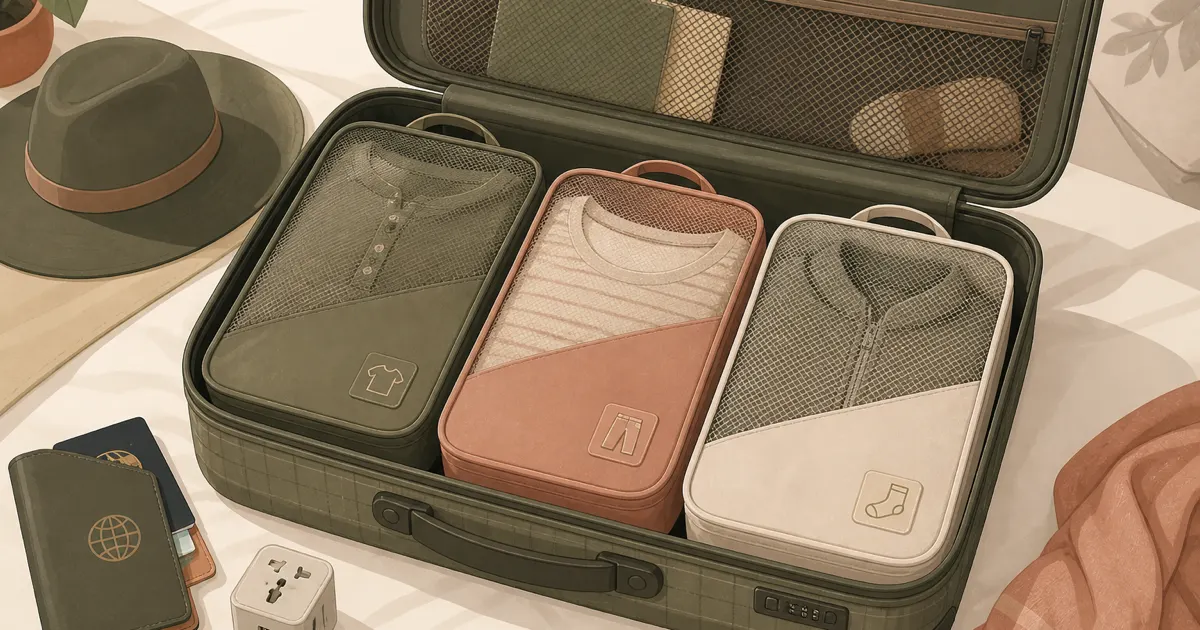
The easiest international setup uses clothing categories that still make sense on day ten. Put tops in one medium cube, bottoms in another, and underwear plus sleepwear in a small cube. This lets you pull one category from a deep suitcase without creating a pile on the bed.
Avoid making a separate cube for every day unless the trip is very short. Daily outfit cubes look tidy at home, but they become awkward when weather changes or you repeat a comfortable shirt. Clothing-type cubes give you more flexibility without requiring a complete repack.
Keep one small arrival cube near the suitcase opening. It should hold underwear, sleepwear, a clean shirt, and any basic layer you need after landing. If the checked bag arrives late, those essentials are even safer in your personal item, but the same small-cube idea still works.
Compare three useful cube styles
The Gonex Extensible Compression Packing Cubes are a sensible international set when you want a few soft organizers rather than a huge bundle. Amazon lists the set at 4.6 stars from more than 10,000 reviews. Buyers often like the space savings and light nylon, while zipper snagging is a recurring tradeoff.
The Veken 6 Set Packing Cubes suit travelers who value visibility. Mesh panels help in dim hotel rooms, and the included laundry bag gives worn clothes a home without using a clean-clothes cube.
The BAGSMART Compression Packing Cubes make more sense when your itinerary crosses warm and cold weather. Amazon shows 4.6 stars from more than 13,000 reviews. The compression zipper helps with sweaters, but the set is less useful if every cube is packed until the zipper strains.
Use compression only where it helps
Compression reduces soft volume. It does not reduce weight, and it does not improve every type of clothing. Sweaters, casual shirts, leggings, and soft jackets usually compress well. Dress shirts, linen, structured clothing, and anything you need immediately often come out better in a standard cube.
Use one compression cube for the bulkiest group instead of compressing the entire suitcase. A hard block of tightly packed clothes is difficult to fit around shoes, a toiletry bag, and odd-shaped travel gear. Leaving some flexibility makes the whole bag easier to close.
Check the airline weight limit before celebrating extra space. Compression can make it easy to add more clothing without noticing the weight. A portable luggage scale is useful, but the simplest check is to pack from a written list and stop when each planned category is covered.
Leave room for the return trip
International trips usually produce laundry, receipts, gifts, and items that no longer fit as neatly as they did at home. Leave part of one cube empty on departure, or pack an empty laundry bag along the hinge. That space becomes more valuable with every hotel change.
Move worn clothes into one zone each evening. Dry items can share a laundry cube. Damp swimwear and workout clothes should air first or travel in a separate leak-resistant pouch. Our guide to storing dirty clothes while traveling covers the clean-and-dirty split in more detail.
Do not use a vacuum bag for everything unless you know you can reproduce the same compression before the flight home. Packing cubes close with ordinary zippers and do not depend on a hotel vacuum, which makes them easier for multi-stop trips.
Pack around documents and flight essentials
Packing cubes are for soft goods. Keep passports, medication, chargers, and valuables in your personal item. A travel document organizer can hold passports and reservations, but it should not disappear under a large clothing cube.
Place the first-night cube near the top of checked luggage. Put shoes in their own bag along an edge, and keep toiletries away from clothing cubes in case a bottle leaks. If your suitcase opens like a book, use one half for clothes and the other for shoes, toiletries, and the growing laundry zone.
For a travel backpack, choose fewer and narrower cubes. Large checked-suitcase cubes can create hard corners against your back. The goal is a layout that matches the luggage you actually carry, not the attractive grid shown in a product photo.
Common mistakes
- Bringing every piece from a six- or eight-piece set just because it came in the package
- Compressing wrinkle-prone clothes before a business dinner
- Filling all available space before the trip begins
- Mixing wet laundry with ordinary worn clothes
- Burying passports, medicine, or arrival essentials beneath clothing cubes
- Ignoring airline weight limits after compression creates more room
Final takeaway
Packing cubes for international travel should make repeated packing easier. Use three or four flexible zones, keep one arrival cube accessible, compress only bulky soft clothes, and save room for laundry. Gonex is a useful compact set, Veken is easiest to scan, and BAGSMART helps most when changing weather adds bulky layers.
Frequently Asked Questions
Are packing cubes worth it for international travel?
Yes, especially on multi-stop trips. They let you move clothes between suitcases, hotel drawers, and backpacks without rebuilding the whole bag.
How many packing cubes should I take abroad?
Three or four useful cubes are enough for most travelers: one for tops, one for bottoms, one for underwear and sleepwear, plus an optional laundry cube.
Should I use compression cubes for a long trip?
Use compression for soft, bulky items such as sweaters. Keep wrinkle-prone shirts and the clothes you need on arrival in ordinary cubes.
Where should packing cubes go in checked luggage?
Put medium cubes side by side across the suitcase base. Keep a small arrival cube near the top and leave the hinge area for shoes or laundry.