How to Pack a Backpack for Travel Without a Sore Shoulder
Packing cubes
Learn how to pack a backpack for travel with heavy items near your spine, soft cubes that flex, and a clear split between daypack and travel pack.
Our picks
A suitcase forgives bad weight distribution. A backpack does not. Pack the same cube stack wrong and you feel it in your shoulders by block three of the city walk. This guide covers layout, cubes, and which bag does which job.
For zone habits that transfer from suitcases, read how to use packing cubes. For bulky layers that need a shrink step, see best compression packing cubes. Here is the backpack-specific version.
Weight distribution before anything cute
Put dense items against the back panel: laptop in its sleeve, toiletry liquids (sealed), shoe bag, power bank, and water. Mid-height along the spine is usually more stable than a brick at the very bottom that pulls the pack off your hips, or a brick up high that tips you backward.
Lighter soft clothes fill the outer volume toward the front of the pack. That keeps mass close to your body. Never load the daisy-chain front pocket with a full water bottle and a hard drive if those items can sit in a back-panel sleeve instead.
Hip belt on when the pack is heavy. Tighten shoulder straps after the hip belt takes weight. If your harness does not fit, no packing trick fully saves you, but good distribution still helps.
Packing cubes that flex in a backpack
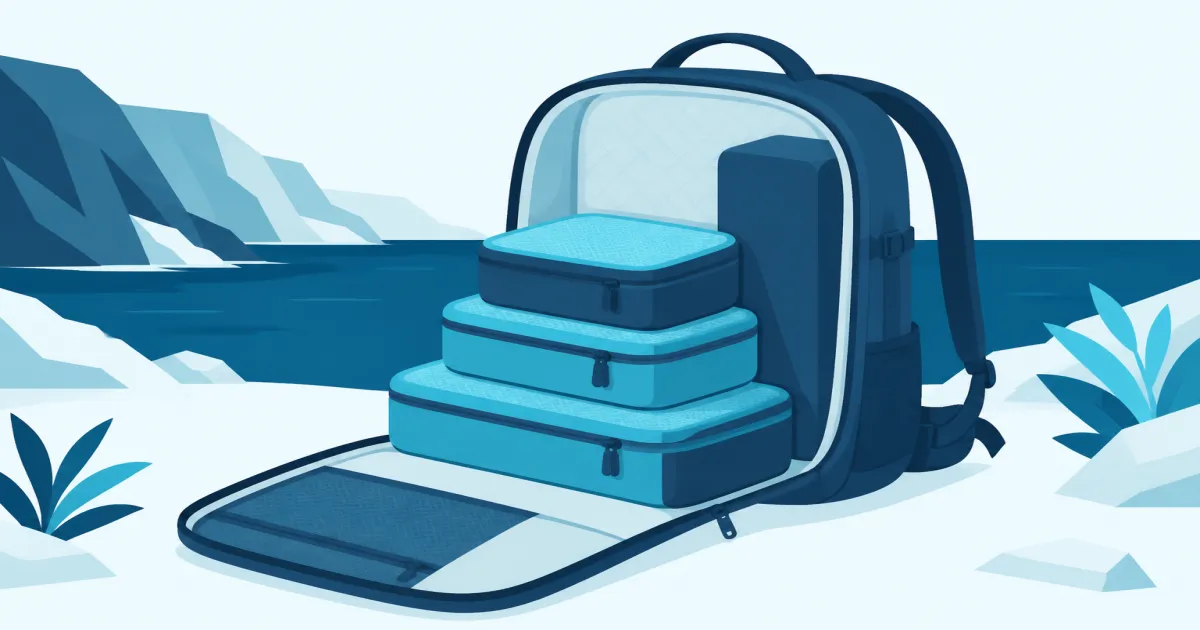
Soft-sided cubes beat rigid boxes in curved packs. Assign the same zones you would in a suitcase: tops, bottoms, underwear, optional outerwear. Measure the pack's main compartment and choose cubes that stack vertically or sit side by side without fighting the back panel.
One compression cube for a fleece or hoodie is useful. Four compression bricks can create a stiff slab that will not mold to your back. Mix compression with regular cubes so the load can settle into the harness shape.
Do not overstuff cubes until zippers bow. In a backpack, an overpacked cube becomes a pressure point against your spine. Leave a little give so the pack can compress when you cinch compression straps.
Daypack vs travel pack roles
A travel pack (35–45L class for many one-bag trips, sizes vary) holds the trip wardrobe and stays at the hotel or in overhead bins. A daypack carries water, a layer, snacks, and valuables for the day. Mixing those jobs is how people hike across a city with four days of shirts on their back.
If you only bring one bag, keep a small stuff sack or packable tote for daytime so you are not wearing the full travel pack to dinner. If you bring two bags, the daypack is also your personal item on flights: meds, liquids pouch, chargers, and one change of clothes if bins look full.
Never put passport and meds only in the big pack under the bus. Valuables stay on your body or in the daypack you keep with you.
Layer the pack bottom to top
Bottom (near the base): shoes in bags, dirty laundry pouch, or items you need least during the day. Mid back panel: laptop and dense tech. Upper main compartment: clothing cubes you want at the hotel first. Lid or top pocket: snacks, rain shell, documents.
Side pockets: water bottles only if the pack rides stably with that weight. Some travelers prefer water inside against the spine instead. Test at home with a loaded walk around the block before you trust a new layout on travel day.
External straps hold a jacket you might shed, not a random fourth pair of shoes. If it does not fit inside with cubes closed, it probably should not come.
Hotel and transit resets
At the hotel, pull cubes out and treat them as drawers. Do not dump the entire pack onto the bed if you need to leave quickly for a meeting. Keep the daypack staged with tomorrow's layer and chargers.
On trains and buses, keep the liquids pouch and documents in the top pocket. You want security and ticket checks without unpacking underwear cubes in the aisle.
If rain is likely, keep a packable shell in the top lid, not buried under cubes. Wet weather is when people dump the whole pack on a cafe floor hunting for a jacket. Same rule for tickets and transit cards: top pocket, not the bottom shoe lane.
Common backpack packing mistakes
Heavy books in the front pocket. Shoes loose against a laptop. All-compression cube stacks that will not flex. Filling every liter so hip-belt pockets cannot close. Using a school daypack as a two-week travel pack. Skipping a laundry pouch until damp socks perfume the clothing cubes.
Learning how to pack a backpack for travel is mostly physics and editing. Cap outfits the same way you would for a carry-on roller, then place weight where your back expects it.
Soft-pack gear for backpacks
The Gonex Extensible Compression Cubes (4-pack) stays flexible when empty corners need to collapse against the pack.
Skip huge hanging toiletry theaters in a trail bag. The Readywares Waxed Canvas Dopp Kit holds the basics and slides beside the cubes. Keep rain layers accessible and food or water outside the clothing zones.
Final takeaway
Heavy gear at the spine, soft cubes for clothes, compression only where bulk needs it, and a daypack that is not a second wardrobe. Walk a test loop at home before you fly. Adjust straps after the pack is fully loaded, not while it is half empty on the bed. For more cube and compression detail, use the guides linked above or browse the Packneatly blog and homepage.
Frequently Asked Questions
Where should the heaviest items go in a travel backpack?
Close to your spine and roughly mid-back height. Water bottles, laptop, and shoe bags belong near the back panel, not in the outer front pocket.
Can I use packing cubes in a backpack?
Yes. Softer cubes flex against curved panels better than rigid bricks. Assign zones the same way you would in a suitcase.
Should I use compression cubes in a backpack?
One compression cube for bulky soft layers helps. An all-compression stack can turn the pack into a stiff slab that fights the harness.
What is the difference between a daypack and a travel pack?
A daypack carries today's water, layer, and valuables. A travel pack holds the full trip wardrobe. Do not treat a tiny daypack as your only luggage for a week.
How full should a backpack be?
Aim for firm but not exploding. You need room to compress the load against the frame sheet and still close zippers without sitting on the pack.
Where do shoes go in a backpack?
In bags at the bottom or in a dedicated shoe compartment if your pack has one. Keep dirty soles away from clothing cubes.