Best Compression Packing Cubes (2026): Shrink Bulky Layers Without Wrecking Your Bag
Packing cubes
Compression cubes reclaim suitcase volume for jackets and knits. Here is how to pick a set that packs down without turning every shirt into a crease factory.
Our picks
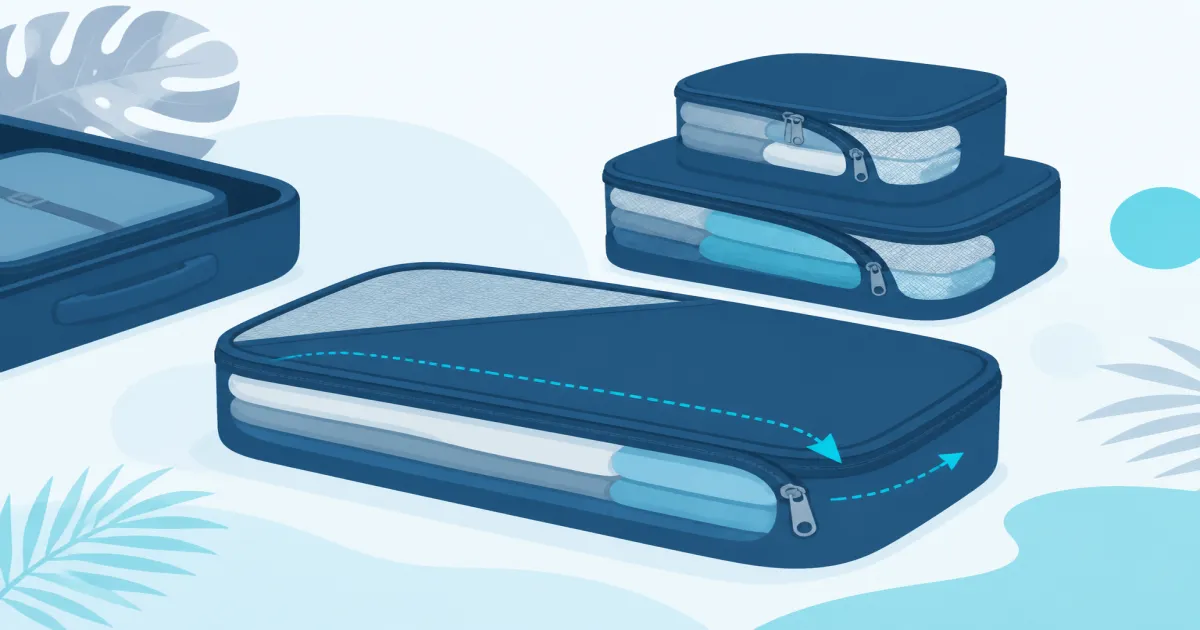
Compression packing cubes have a second zipper that squeezes air and fabric into a flatter brick. Done well, they turn a puffy jacket and two sweaters into one tidy layer. Done poorly, they create a hard slab that fights your suitcase zipper and wrinkles everything inside.
This guide is for travelers who already like packing systems and want volume control. If your bag is a carry-on, also read best packing cubes for carry on. For tighter budgets, see best cheap packing cubes. If you need cubes that grow for bulky days instead of only shrinking loft, see best expandable packing cubes.
A dual-zip cube is easier to live with than a one-way vacuum bag. You pack it expanded, close the contents zipper, then pull the compression zipper until the brick is firm, not rock-hard. Over-compression is what creates permanent fold lines and stressed zippers. Small, medium, and large cubes should nest in a 22-inch carry-on, not only in a giant checked suitcase.
Coil zippers snag first at the corners under load. Mesh windows help you find clothes without dumping the cube. Solid panels hide dirty laundry better. Skip novelty "max compression" kits that only work if you never open them mid-trip. Travel gear has to reopen cleanly every day.
Quick comparison
Best overall: BAGSMART 6-Set Compression Packing Cubes
Best for: Carry-on and checked travelers who pack bulky layers and reopen cubes daily.
The BAGSMART 6-Set is the clearest answer when someone wants the best compression packing cubes without a special constraint. You pack the cube expanded, close the contents zipper, then pull the compression zipper to shrink the brick. That sequence is gentler on fabric than stuffing clothes into an already-tight sack.
Look for at least one large cube for outerwear, one medium for tops, and one small for socks or base layers. Color-coding helps if you share a bag. Reinforced corners matter more than logo embroidery. Stop compressing when the cube is firm. A rock-hard brick fights the suitcase zipper and creases dress shirts.
Skip if: You mostly pack thin layers, or you live out of a backpack and hate rezipping dual zippers. Regular cubes plus a better edit are often enough.
Pros
- Predictable volume savings on jackets and sweaters
- Reopens cleanly for hotel "live out of the suitcase" use
- Size ladder usually fits 40L–45L carry-ons
Cons
- Costs more than basic non-compression cubes
- Easy to over-compress dress shirts if you treat every cube the same
Buy if: You fly often and already know your packing zones.
Best starter: Gonex Compression Packing Cubes
Best for: Travelers who want to try compression in a lighter, smaller set.
The Gonex Compression Packing Cubes are a good starter choice. Several set sizes let you begin small, and see-through mesh means you can find a shirt without opening three cubes. The fabric is thinner than BAGSMART, so do not yank the compression zipper around jeans rivets or jewelry.
Pair this pick with a separate opaque laundry bag or a solid dirty-clothes cube. Mesh is great for clean clothes and less great when you want to hide gym gear. Keep liquids in a dedicated toiletry bag outside the cube stack.
Skip if: You pack weekly and sit on overstuffed bags. Step up to a tougher six-set before the starter zippers complain.
Pros
- Several set sizes for different trip lengths
- Mesh makes it easier to find clothes
- More than 10,000 Amazon ratings provide useful ownership history
Cons
- Mesh can snag on jewelry or zipper pulls if you overstuff
- Not the best choice for hiding dirty laundry
Buy if: You want a well-reviewed starter set and do not need the largest six-piece layout.
Compression vs structured cubes
Structured cubes hold shape and protect shirts. Compression cubes trade shape for volume. Most efficient packing systems mix both. Use compression for puffy jackets, hoodies, and soft knits. Use structured cubes for button-downs, trousers you care about, and anything you want to grab without ironing.
If your suitcase already closes easily, compression is optional. If you are one hoodie away from sitting on the lid, compression is the cheapest upgrade short of a bigger bag. Remember: volume shrinks, weight does not. Security still weighs the same sweater.
How to pack compression cubes without creasing everything
Fold or roll soft items, leave a little air, then compress in stages. Stop when the cube is firm, not rock-hard. Over-compression is what creates permanent fold lines and stressed zippers.
Pack the compressed brick at the bottom or against the suitcase spine so it becomes a stable platform. Lighter structured cubes sit on top where you can open them first at the hotel. Keep shoes and hard objects out of compression cubes; they create pressure points and odd lumps.
For dirty clothes, either reverse one cube mid-trip or use a dedicated laundry sack. Mixing clean and dirty in the same compressed brick is how smells migrate into everything you still plan to wear.
Carry-on and checked bag notes
In a carry-on, one large compression cube is often enough. Two oversized compression bricks can create a rigid sandwich that will not flex around laptop sleeves or water bottles. Leave a compressible gap for last-minute souvenirs.
In a checked bag, compression helps more because you can stack deeper. Still leave room for the bag to flex when handlers throw it. A suitcase packed into a perfect rigid block is more likely to stress seams and zippers in transit.
Pair cubes with a slim toiletry layout so liquids are not fighting for the same compressible zone. Cubes organize soft goods; toiletry kits handle mess and TSA rules.
Common mistakes
- Compressing dress shirts the same way you compress a fleece
- Buying eight compression cubes when three mixed cubes would work better
- Ignoring zipper direction so pulls dig into neighboring items
- Assuming compression fixes an overweight bag
- Skipping a laundry plan until day four of a week-long trip
Who should skip compression cubes
Skip them if you mostly pack thin layers, or if you live out of a backpack with frequent access and hate rezipping dual zippers. Skip them if you are ruthless about packing light already. Regular cubes plus a better edit are often enough.
Keep them if jackets, sweaters, or kids' bulk keep forcing you to sit on the suitcase. Compression is just a space tool.
Final recommendation
For most readers shopping the best compression packing cubes, start with the BAGSMART 6-Set for its wide size range and dual-zip layout you can reopen every night. Choose Gonex if you want a smaller, mesh-panel starter set. Mix in structured cubes from our broader packing-cube guide so shirts and trousers stay presentable. Build a system you can reset every night.
Frequently Asked Questions
Do compression packing cubes damage clothes?
Light compression on soft layers is usually fine. Max-zipping dress shirts and structured knits overnight can leave deep creases. Pack those in a structured cube instead.
Are compression cubes allowed in carry-on bags?
Yes. They are just organizers. Airlines care about bag size and weight, not whether your cubes zip flat.
How many compression cubes do I need?
Most travelers do well with one large compression cube for bulky items plus two regular cubes for daily outfits. A full compression-only set is rarely ideal.
Compression cubes vs vacuum bags: which is better for trips?
Cubes win for hotel living. You can open, grab, and rezip without a vacuum. Vacuum bags shine for one-way moves or seasonal storage, not week-to-week travel.
Will compression cubes reduce my bag weight?
No. They reduce volume, not mass. If you are near a weight limit, remove items instead of squashing harder.
Should beginners start with compression cubes?
Start with a mixed travel packing cube set, then add one compression cube for jackets or sweaters. Full compression sets are easier once you know your layout.