How to Pack a Suitcase with Packing Cubes (2026 Layout Guide)
Packing cubes
Packing cubes turn a suitcase into labeled drawers. Here is how to pack a suitcase with packing cubes: sizing, category zones, stack order, flex gap, and hotel workflow.
Our picks
Packing cubes only work when they fit the bag and follow a stack order. How to pack a suitcase with packing cubes is a step-by-step layout: size cubes to your interior, fill by category, place cubes in layers, protect a flex gap, and reset nightly so zippers still close on day six.
Start from the packing cubes category and the best travel packing cubes pillar if you still need a set. Daily cube habits and fold vs roll rules are in how to use packing cubes. For carry-on-sized sets, see best packing cubes for carry on. This page is the suitcase integration: sizes, order, gaps, and hotel workflow.
Step 1: Measure your suitcase interior
Open the bag flat and measure width, depth, and usable height inside the main cavity. Ignore exterior dimensions on the product tag. Those numbers include wheels and handles you cannot pack inside.
Compare measurements to cube specs before you buy. Cubes should nest side by side with a little play, not one giant brick that leaves odd wedges of wasted space. Two medium cubes plus one slim often beat one extra-large cube in a carry-on.
Note hinge and handle bump locations. Some bags lose an inch of height on one side. Plan the flex gap on the short side if the interior is uneven. Cubes that fit on paper but fight the curved lid will frustrate you every trip.
Step 2: Assign one cube per category
Typical assignments: medium cube for tops, medium for bottoms, small for underwear and socks, compression cube for outerwear, plus non-cube zones for shoes, toiletries, and tech. Add a laundry cube or reverse one pouch for dirty clothes mid-trip.
Do not split one category across two cubes unless two people share the bag. Splitting tops across blue and gray pouches means you always open both. One category, one cube, one label.
Keep liquids, shoes, and tech out of clothing cubes. TSA wants the quart bag accessible. Shoes grind dirt into fabric. Chargers knotted inside a tops cube tangle every shirt. Cubes organize clothes; other pouches handle the rest.
Color-code or tag cubes if you share a suitcase. "Samira green tops, Jordan navy bottoms" prevents 6 a.m. confusion. Shared items get one neutral pouch both can open.
Step 3: Fill cubes with the right fold method
Inside each clothing cube, pack firm folded items on the bottom and soft rolls on top. Roll tees and underwear; fold button-downs and trousers. Do not overstuff until the zipper bows. A finger of slack lets the cube slide into the suitcase without bulging.
Use one compression cube for hoodies, fleeces, or a puffer at the bottom of your stack order, not for dress shirts. Compress in stages: pack expanded, zip main closure, then pull compression zipper until firm. Stop before the cube feels like concrete.
Stand soft rolls vertically in smaller cubes when you can. You see each item from the top and pull one without disturbing the stack. Horizontal rolls work too, but vertical access is faster at hotels.
Close every cube fully before placing it in the suitcase. Half-zipped cubes catch on lid linings and spill at security. A closed cube is a drawer you can move as one unit.
Step 4: Place cubes in the suitcase in order
Bottom layer over the wheels: shoes in bags, then compression outerwear cube if you have one. This layer should be flat and heavy. It stabilizes the bag and keeps weight where the wheels are.
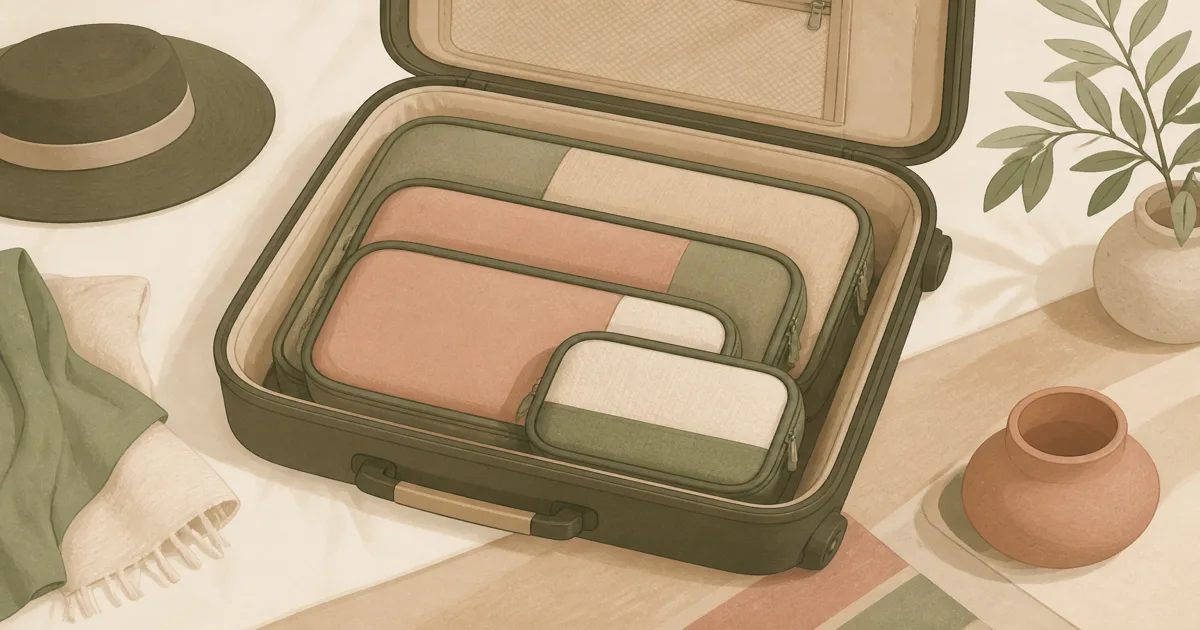
Middle layer: tops, bottoms, and underwear cubes with zippers facing up when the suitcase opens flat on a bed. This is the layer you live from during the trip. Nest cubes side by side; avoid stacking more than two high unless your bag depth requires it.
Top layer outside cubes: quart bag, tech pouch, medications, one light layer, foldable tote. These items must lift out for security without removing cube bricks.
Side and lid pockets: documents, book, sunglasses. Keep them flat. Do not load exterior pockets until the cube layout closes cleanly.
Step 5: Leave a flex gap on purpose
A perfectly full cube mosaic fails when travel adds volume. Leave one to two inches of slack along the hinge side or across one end of the cavity. The gap holds souvenirs, a growing laundry cube, or a jacket you acquire on the trip.
Close the suitcase and run the zipper without sitting on the bag. If the lid bows or the zipper fights, remove one cube item to your personal item or wear a layer on the plane. Forced closure at home pops open in the overhead bin.
The flex gap is not wasted space. It is what makes how to pack a suitcase with packing cubes work on the return leg, not just outbound.
Step 6: Hotel workflow and nightly reset
At the hotel, open the suitcase and leave cubes inside. Pull the cube you need to the nightstand or desk. Do not empty cubes into dresser drawers unless you will repack the same way before checkout.
Each night: worn clothes to laundry cube or bag, tomorrow's outfit to the top of the relevant cube, zippers closed, liquids and tech back in the top pouch. Two minutes of reset beats an hour of repack on the last night.
If you buy cubes mid-trip, keep receipts flat in the tech pouch, not stuffed into a clothing cube. Same rule for boarding passes and hotel keys: one quick-grab zone.
Security day: lift the top pouch and quart bag out, leave cube layout intact. Repack in the same order after the belt. Cubes shine here because clothing never fully explodes onto the floor.
Common cube packing mistakes
Buying a six-cube set with no size labels and discovering nothing fits your bag is the top mistake. Measure first, buy second. Best packing cubes for carry on helps match sets to standard interiors.
Using all compression cubes turns the suitcase into a rigid block that will not flex for overhead bins or odd-shaped souvenirs. One compression cube plus regular cubes is the usual sweet spot.
Overstuffing every cube eliminates the flex gap in the suitcase and creases every shirt. Cubes should close cleanly. The suitcase should close without force. Two different tests, both must pass.
Unpacking all cubes at the hotel merges your system with housekeeping chaos. Live out of cubes. The workflow in how to use packing cubes exists so day five still feels like day one.
Packing cubes in random order without a bottom-heavy stack makes spinners tip and handles feel brutal. Heavy compressed cubes low, daily cubes middle, grab-and-go non-cube items top. Order matters as much as cube quality.
Cubes for this suitcase layout
Use BAGSMART 6-Set Compression Packing Cubes when the suitcase fight is volume. Compress jackets, then stack regular soft items beside them.
Prefer visibility at security and in hotel rooms? The Veken 6-Set Packing Cubes show contents through mesh so you open fewer zippers. Either way, leave a flex gap. A perfect Tetris pack fails the first time you buy a souvenir book.
When your cube layout still will not close
Edit outfits before you buy bigger cubes. Removing one pair of shoes or one redundant sweater often fixes closure without new gear. Cubes reveal overpacking faster than loose piles because each brick has a visible size.
Move dense items to your personal item: laptop, book, travel shoes. Wear the bulkiest jacket on the plane. Shift one medium cube to a travel backpack if your ticket allows a personal item.
If cubes fit but the bag still fights the zipper, check hinge-side height. One cube may be one inch too tall for your bag model. Swap that cube for a slim version or repack that category flat in the lid pocket if depth allows.
How to pack a suitcase with packing cubes repeats every trip once you nail sizing: measure the bag, one cube per category, bottom-heavy order, flex gap, nightly reset. Cubes are drawers; the suitcase is the dresser. Treat both with the same discipline and the system stays intact start to finish.
Frequently Asked Questions
How many packing cubes fit in a carry-on suitcase?
Most carry-ons fit three to five cubes side by side plus shoes and a top pouch. Measure your bag interior before buying a set so cubes nest without fighting the lid zipper.
What size packing cubes do I need for a suitcase?
Match cube depth to your bag height minus shoes and flex gap. Medium cubes for tops and bottoms, small for underwear and socks, one large or compression cube for outerwear.
In what order do packing cubes go in a suitcase?
Heavy and compressed cubes low over the wheels, daily clothing cubes in the middle with zippers up, and none above the flex gap near the hinge. Liquids and tech stay outside cubes on top.
Should I overstuff packing cubes to save space?
No. Overstuffed cubes crease clothes and bow zippers. Close each cube with a finger of slack so the suitcase lid closes without force.
Do I unpack packing cubes at the hotel?
Usually not. Live out of cubes as drawers inside the open suitcase. Nightly reset moves worn items to a laundry cube and tomorrow's outfit to the top of the relevant cube.
Can I mix compression cubes and regular cubes in one suitcase?
Yes. Use one compression cube for bulky outerwear at the bottom and regular cubes for daily clothes in the middle. All-compression sets get rigid and fight overhead bins.
Should shoes go inside packing cubes?
No. Keep soles in shoe bags along the wheel edge. Shoes grind grit into fabric and steal cube volume you need for clothes.
What goes above packing cubes in a suitcase?
Liquids, tech, medications, and one light layer. Those items need to lift out at security without dismantling your cube stack.