Carry On Packing Tips: 12 Habits That Save Bin Space and Time
Carry-on
Good carry on packing tips are boring on purpose: edit first, zone the bag, stage security items, and reset nightly. Here are twelve that actually stick.
Our picks
Most carry-on chaos is overpacking with good intentions. You bought the right bag, maybe even the cubes, and still sat on the zipper at 5 a.m. These carry on packing tips focus on decisions that survive security, overhead bins, and day-four hotel resets.
For a full week-long framework, read how to pack a carry on for a week. For cube sizing in overhead bins, see best packing cubes for carry on. This page is quick habits you can adopt tonight.
Tip 1: Count outfits, not days
Five mix-and-match bottoms and five to seven tops cover most week-long trips if you laundry once. Pack for how many outfits you need, not how many calendar days. If an item does not pair with at least two others, it stays home.
Tip 2: Wear the bulkiest layers on the plane
Jacket, boots, and heaviest jeans travel on your body, not in the cube stack. That frees inches for items that actually need folding. You can tie a coat around your waist after takeoff if cabins run warm.
Tip 3: One compression cube, not four
One compression cube for outerwear beats an all-compression set that turns your bag into a rigid brick. Flex matters in overhead bins shared with everyone else's overstuffed rollers.
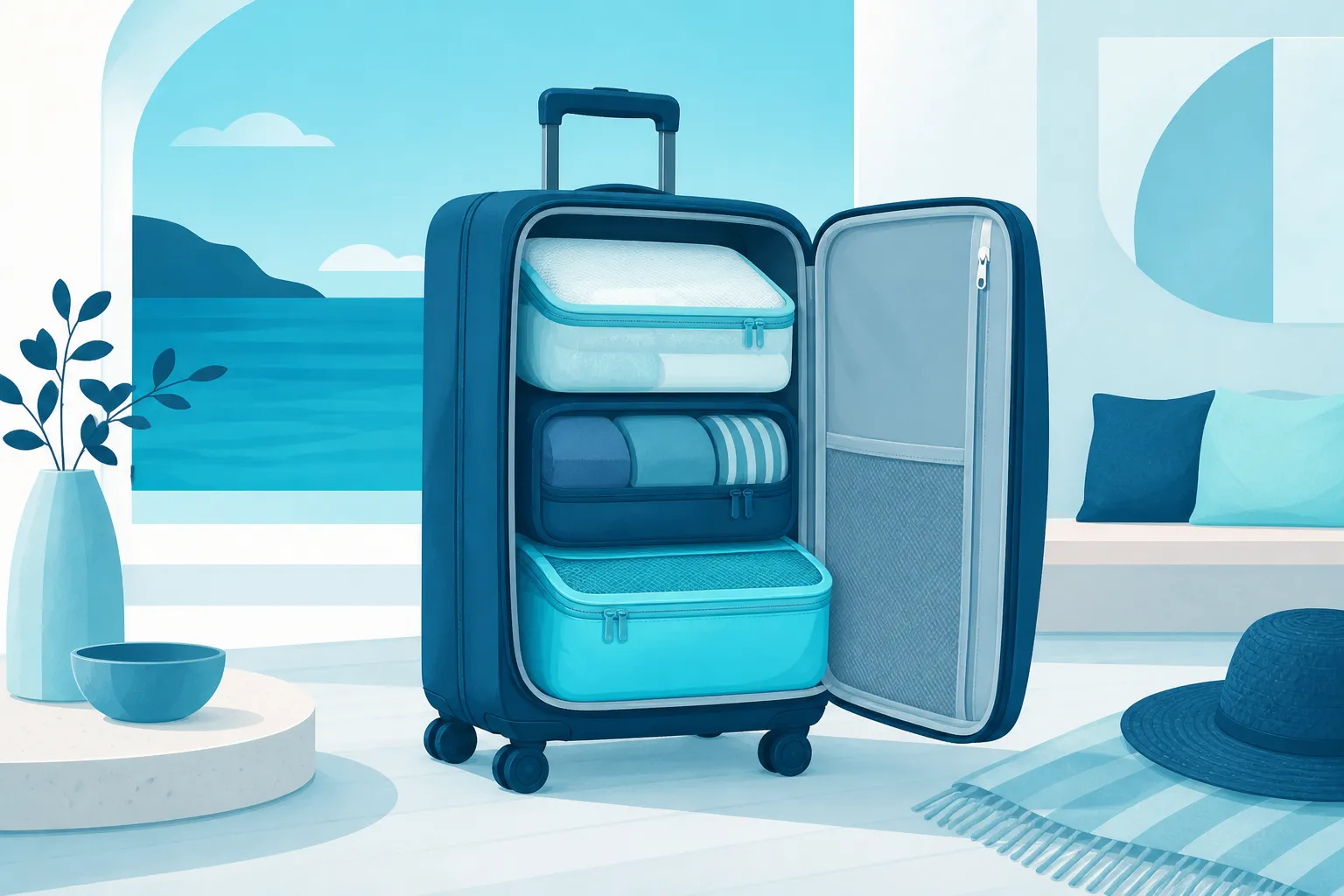
Tip 4: Assign cube zones and stop there
Tops, bottoms, underwear, outerwear or activewear. A fifth "misc" cube becomes a junk drawer. Liquids, shoes, and cables live outside clothing cubes entirely.
Tip 5: Leave a real flex gap
Pack to 85-90% full on the outbound leg. Souvenirs, conference swag, and weather surprises show up mid-trip. A bag packed to 100% on day one becomes a checked bag fee on day six.
Tip 6: Stage liquids and laptop for one-motion removal
Quart bag in personal item or front pocket. Laptop in a sleeve you can pull without unpacking clothes. If you have to dig through the whole bag to find liquids or your laptop, reorganize before your next flight. For a full under-seat checklist, use the personal item packing list.
Tip 7: Personal item is insurance, not a second closet
Carry meds, one change of clothes, chargers, and the quart bag in the personal item. If the overhead bin fills, you still function. A backpack crammed with four extra outfits defeats the point.
Tip 8: Shoes get bags and a fixed address
One worn pair, one packed pair max. Shoe bags at the bottom or wheel end keep soles off shirt cubes. Never loose shoes rattling against a laptop sleeve.
Tip 9: Nightly two-minute reset
Dirty clothes to laundry cube, tomorrow's outfit on top, zippers closed. Living out of cubes beats dumping everything into hotel drawers you forget to repack.
Tip 10: Edit in this order when the bag will not close
Cut duplicate shoes, maybe outfits, full-size toiletries, backup gadgets, then hardcover books. Do not sacrifice flex gap first. Remove one bottom and one top before you buy a bigger bag.
Tip 11: Match bag shape to trip type
Rollers tolerate slightly firmer cube stacks. Backpacks need softer cubes that flex against curved backs. Both need grab pockets for security items.
Tip 12: Repeat the same layout every trip
Same cube colors, same pocket for passport, same quart bag slot. Repeatability beats novelty. You pack faster and forget fewer items when the map never changes.
Backpack vs roller carry-on tips
Backpack carry-ons need soft cube stacks that flex against curved backs. Keep heavy cubes low and close to your spine. Front-loading backpacks win for security access; top-loaders need more planning.
Roller carry-ons tolerate slightly firmer cubes because the shell holds shape. Put shoes at the wheel end so weight sits near the handle when you tilt the bag. Lid pockets are perfect for liquids and documents.
Both styles fail when you skip grab pockets. If you must unpack half the bag to reach the quart bag, the layout is wrong regardless of bag brand.
Security and boarding habits
At the gate, confirm liquids are staged, electronics are charged, and the coat you wore is actually yours. Boarding group stress makes people repack badly; keep the system simple enough to rebuild half-asleep.
In the overhead bin, wheels-out or wheels-in matters less than not forcing a domed bag into a full bin. Flex gap helps the bag compress beside awkward neighbors. If it will not fit, gate-check early with dignity instead of fighting the last inch.
Place your personal item under the seat before you fight for bin space. That keeps meds and quart bag reachable even when the overhead fills on a full flight.
Hotel habits that protect the carry-on system
Hang toiletries if the bathroom has a hook. Keep clothes in cubes inside the open suitcase. Wipe bottle caps before they return to the kit. These small habits prevent the day-five smell and wrinkle spiral.
If laundry is an option, use it. Carry-on packing tips assume you will wear items twice, not that you packed fourteen unique outfits.
Mistakes even experienced flyers repeat
Buying a bigger carry-on instead of editing clothes. Packing liquids inside compression cubes. Treating the personal item as unorganized overflow. Skipping laundry planning. Adding a sixth cube instead of removing a duplicate top.
Another silent killer: shopping on day two without outbound flex space. Edit before you fly or accept checking a bag home.
When to check a bag anyway
Some trips break carry-on logic: formal events needing multiple shoes, gear-heavy hobbies, or gifts you knew about before you packed. Checking one bag on the outbound leg while keeping a tight personal item is sometimes smarter than doming a carry-on for five days.
Carry on packing tips assume you want speed and fewer lost-bag risks. If your trip needs bulk, check deliberately instead of pretending compression will fix a wardrobe trunk.
Two buys that back these tips
Category cubes like the Veken 6-Set Packing Cubes stop you from digging for a charger under jeans mid-security line.
Refill only what you need into Mrsdry Silicone Travel Bottles (4-Pack). Four sealed 3 oz bottles beat eight half-empty mystery tubes. Everything else in this guide is habit: wear the heavy shoes, keep meds in the personal item, and leave a flex gap.
Final takeaway
The carry on packing tips that stick are boring on purpose: cap outfits, zone with cubes, stage security items, leave flex space, and reset nightly. Wear bulk, keep one compression cube, and repeat the same layout every trip. Faster packing and fewer bin fights beat any single folding hack.
Frequently Asked Questions
What is the best carry on packing tip for beginners?
Cap outfits before you buy organizers. Most carry-on failures are too many clothes, not the wrong pouch.
Should I roll or fold clothes in a carry-on?
Roll soft items, fold structured pieces. Packing cubes handle either if you do not overstuff.
How much empty space should I leave?
Aim for 10-15% flex volume for souvenirs, coat weather, or a messy repack after laundry.
Where do shoes go in a carry-on?
Sole-down in a shoe bag at the wheel end or bottom of a backpack, away from clean clothes.
Do packing cubes help carry-on packing?
Yes, for zoning and hotel reset. See our carry-on cube guide for slim sets that fit overhead bins.
How do I pack for security speed?
Liquids and laptop in removable pockets. Never bury them under compression cubes.